Choosing an office chair can quickly become more complicated than expected. Two chairs can look almost identical but vary considerably in price, adjustability, build quality, comfort and the level of support they provide.
For somebody buying a single chair for a home office, getting it wrong can mean an uncomfortable working day. For an organisation purchasing 20, 50 or 100 chairs, choosing the wrong specification can become a much more expensive mistake.
At Spaces Taylored, we supply office seating for everything from individual home workspaces to commercial offices, schools, universities and public sector organisations. One of the most important things we have learned from specifying workplace furniture is that there is no single best office chair.
The right chair depends on who will use it, how long they will use it for, the type of work they are doing and the environment it will be used in.
This office chair buying guide explains what you should actually look for before making that decision.
Before comparing fabrics, colours or even prices, think about how the chair will actually be used.
A chair used occasionally in a meeting room has a completely different job from a task chair somebody sits in throughout the working day. Likewise, a chair used by one person can be specified specifically around that individual, whereas seating used at shared or hot desks needs enough adjustment to accommodate a much wider range of users.
At Spaces Taylored, this is normally where we start when helping a customer choose office seating. Rather than asking which chair they like the look of, we look at who will be using it, how many hours it will be occupied each day and whether the workstation is individual or shared.
For occasional use, a relatively straightforward office chair may be perfectly suitable. As the amount of time spent sitting increases, adjustability, support, movement and overall build quality become increasingly important.
For workplaces operating across longer hours, control rooms, security environments and other demanding settings, specialist 24 hour office chairs may also be required.
The application should therefore come before the appearance of the chair.
The term ergonomic is used very widely in the office furniture industry, but a genuinely ergonomic chair should allow the chair to adapt to the person using it rather than expecting the person to adapt to the chair.
Seat height is one of the most basic adjustments. The user should be able to position themselves at an appropriate height for their desk while remaining properly supported.
The backrest is equally important. Good office seating should provide support to the lower back and allow the user to sit comfortably without having to hold themselves in a rigid position throughout the day.
Depending on the chair, further adjustment can include seat depth, lumbar support, arm height, arm width, backrest height, headrest position and the resistance or movement of the chair mechanism.
One of the things we regularly explain to customers at Spaces Taylored is that more adjustment does not automatically make a chair better.
What matters is whether those adjustments are useful for the person who will actually be sitting in it.
A chair with twenty different adjustments is not necessarily a better choice than a simpler chair that suits the user correctly.
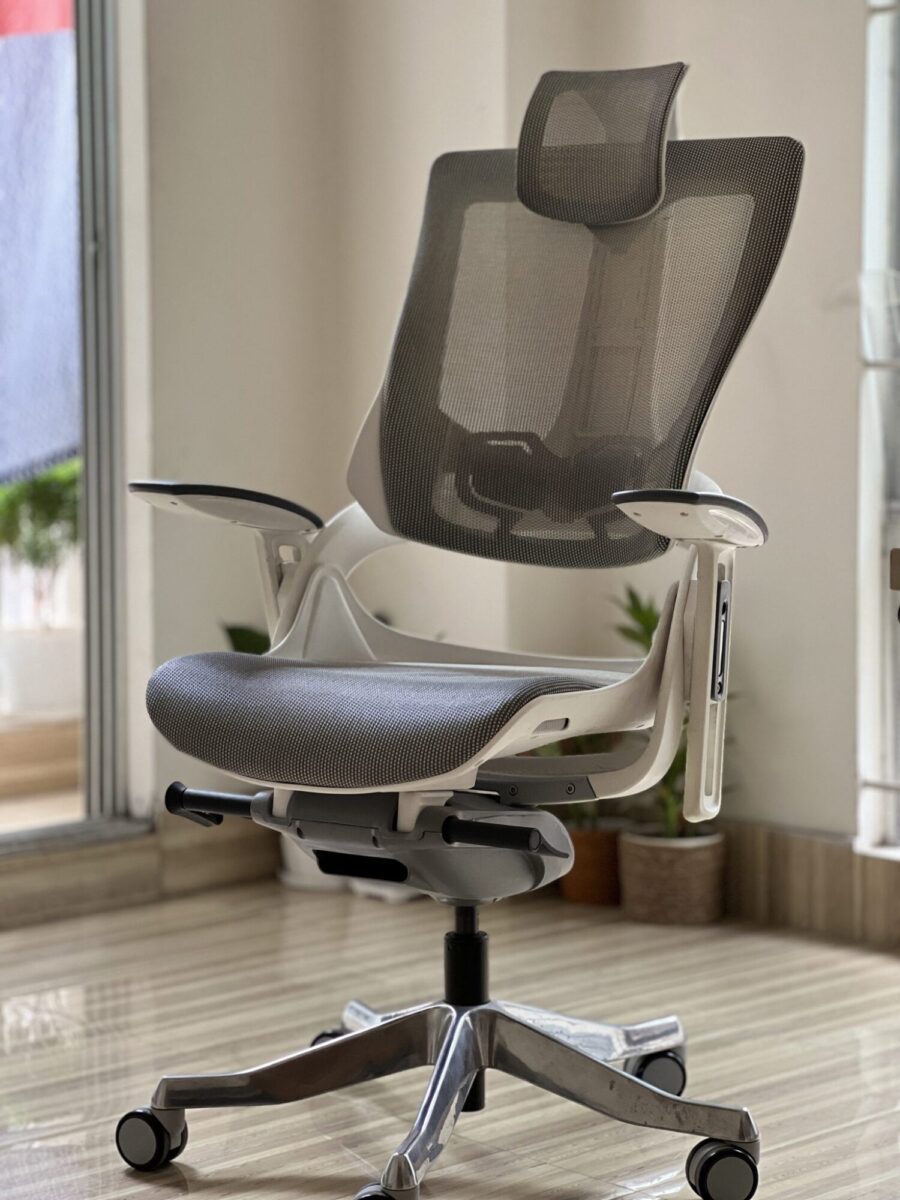
Seat depth is one of the features people tend not to think about until they have sat in the wrong chair.
If a seat is too deep for the user, they may struggle to sit against the backrest without the front edge of the seat pressing against the back of their legs. If it is too shallow, a taller user may not receive enough support through the thighs.
A seat slide allows the depth of the seat to be adjusted forwards or backwards.
At Spaces Taylored, we often recommend considering a seat slide when specifying chairs for shared workstations or larger teams because it gives the chair greater flexibility across different users.
It can also be particularly useful when an organisation wants to standardise one chair model across a wider workforce.
Health and Safety Executive guidance recommends allowing a small gap between the front edge of the seat and the back of the knee. Adjustable seat depth can make achieving this considerably easier across different heights and body shapes.
The lower section of the spine naturally curves inward, and a supportive office chair should help support this area comfortably.
Some chairs have lumbar support designed into the shape of the backrest. Others allow the lumbar position or pressure to be adjusted.
Neither option automatically makes a chair right or wrong.
For an individual user who fits a particular chair well, a good fixed backrest may provide exactly the support required. In a workplace where several people may use the same chair, greater adjustment may make it easier to accommodate different users.
This is one of the reasons Spaces Taylored does not recommend choosing office chairs purely from photographs or product descriptions.
Two chairs can look extremely similar online and feel completely different once somebody actually sits in them.
The mechanism underneath an office chair determines how the seat and backrest move.
Basic office chairs may offer relatively simple backrest or tilt adjustment. More advanced task and ergonomic chairs can use synchronous or asynchronous mechanisms that provide much greater control over movement and positioning.
A synchronous mechanism normally allows the seat and backrest to move together at different ratios as the user reclines. This creates a more natural movement than simply tipping the entire chair backwards as one unit.
Some chairs also allow the tension of that movement to be adjusted according to the user’s weight or preference. Others use weight responsive mechanisms that automatically adapt to the person sitting in the chair.
When Spaces Taylored is comparing chairs for a client, we are not simply counting how many levers each chair has.
We look at how easily the chair can be adjusted, how naturally it moves with the user and whether somebody is realistically going to understand and use those adjustments during the working day.
A complicated mechanism is not much use if nobody knows how to operate it.
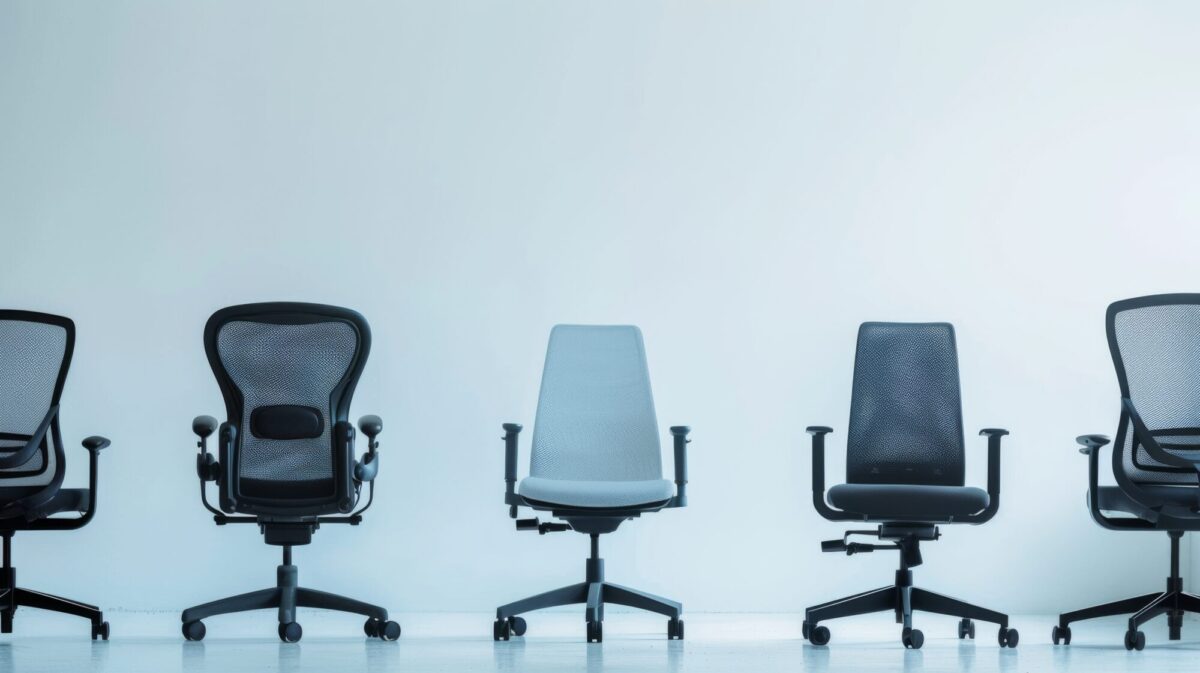
Armrests can provide useful support, particularly for people who spend significant periods using a keyboard and mouse, but they need to be positioned correctly.
Fixed arms can sometimes create a problem if they prevent the chair from moving close enough to the desk.
Adjustable arms provide greater flexibility.
Depending on the chair, you may see 2D, 3D or 4D armrests. This generally refers to the number of directions in which the arms can be adjusted, such as height, width, depth or angle.
For many everyday office environments, height adjustable arms may be sufficient. For somebody requiring a much more individually configured workstation, additional adjustment can be worthwhile.
At Spaces Taylored, we consider the chair as part of the whole workstation rather than as a standalone product. The relationship between the chair, desk, keyboard, mouse and monitor all matters.
Upholstery is partly a matter of appearance, but there are practical differences too.
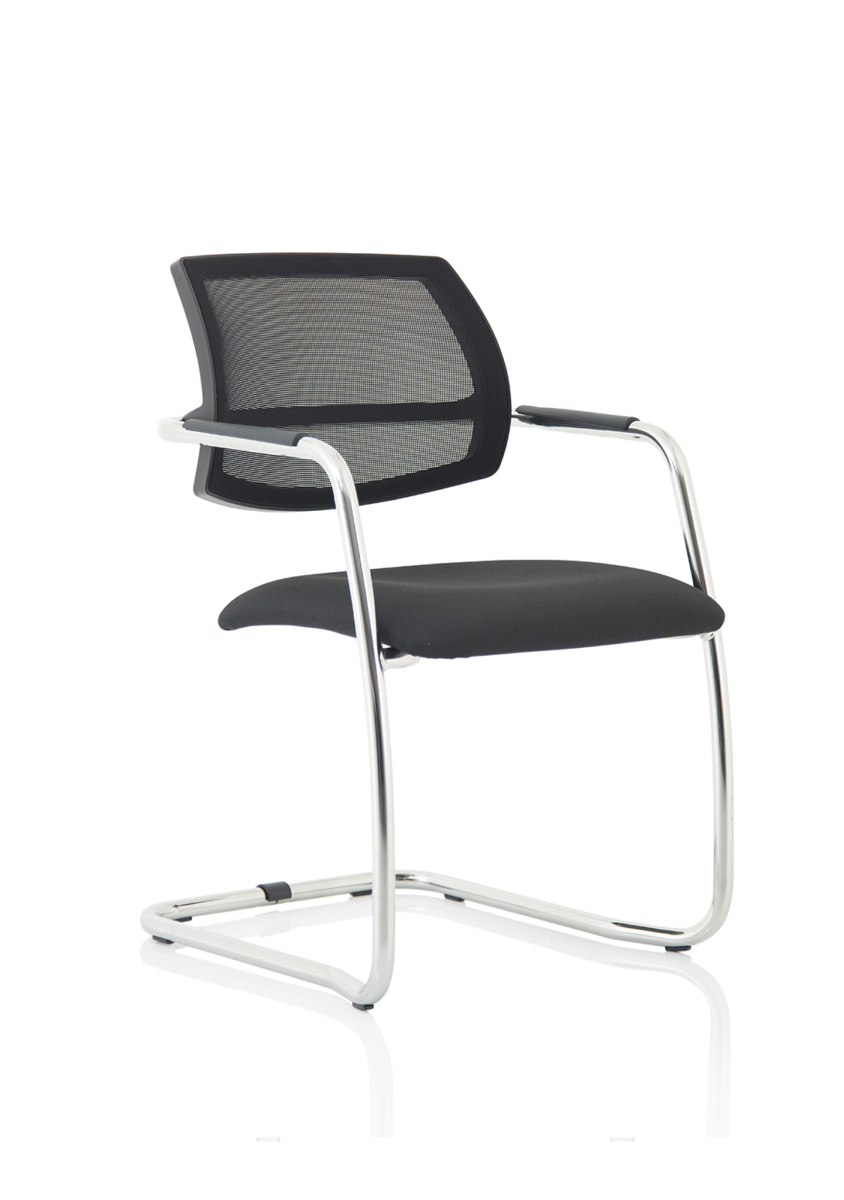
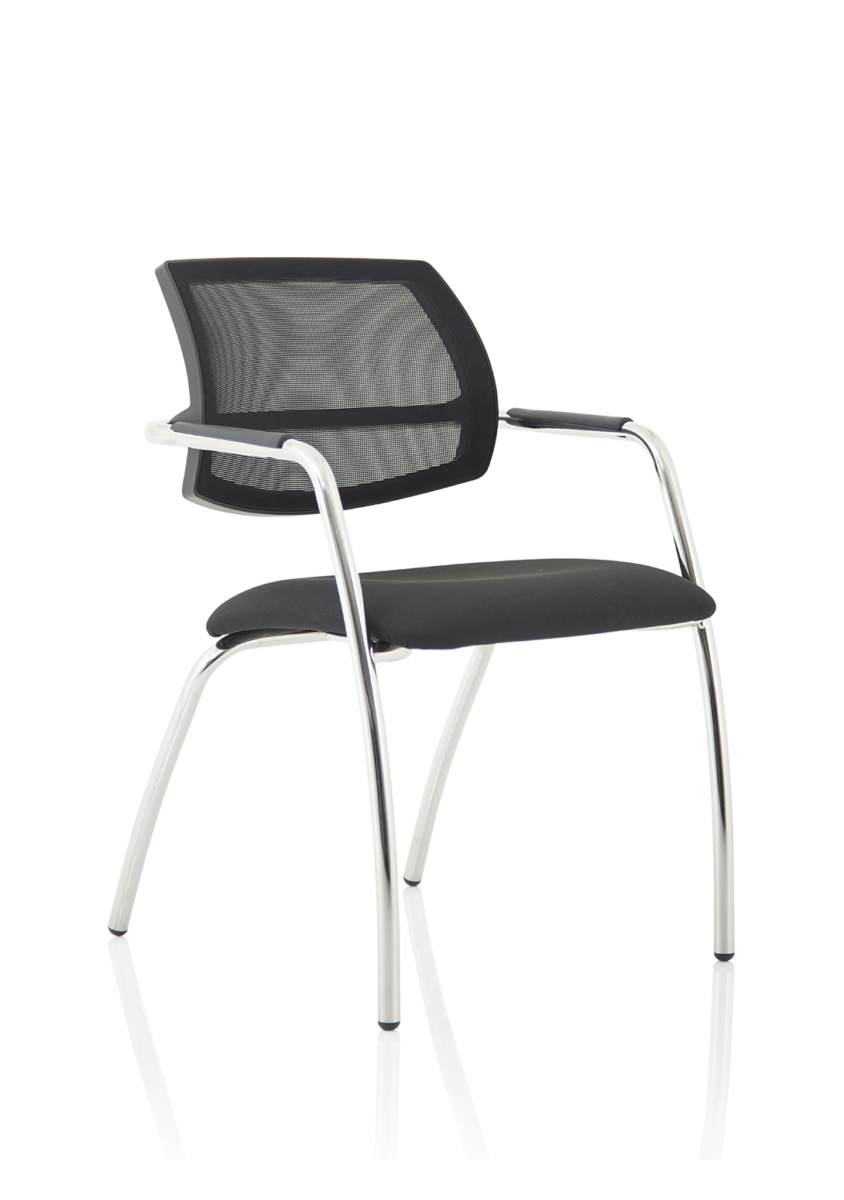
Mesh backed office chairs are popular because they provide ventilation and create a lighter, contemporary appearance. A well designed mesh back can also flex with the user and provide effective support.
Fabric remains one of the most versatile choices for commercial workplaces. It is available in a huge range of colours and performance levels, making it possible to specify seating around branding, interior design, durability and cleaning requirements.
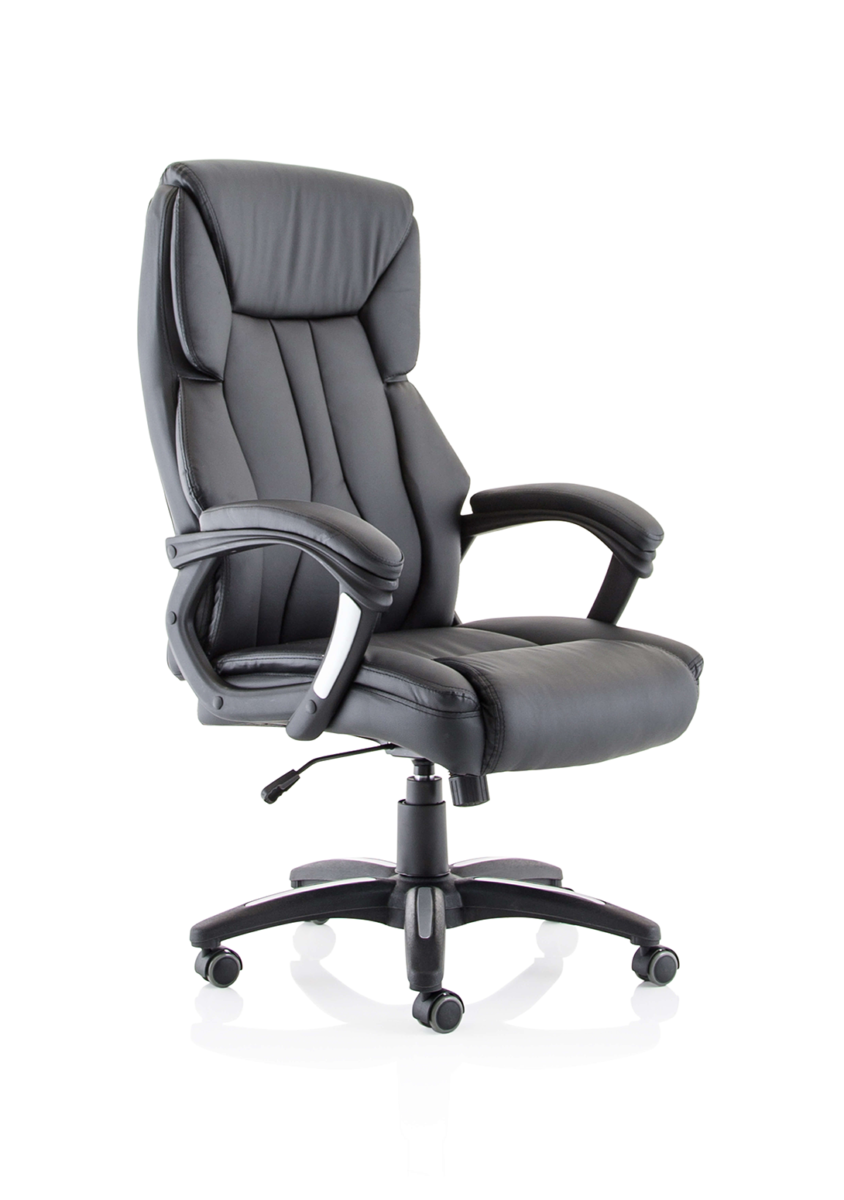
Leather and leather effect chairs tend to create a more executive appearance and can work particularly well in management offices, boardrooms and client facing environments.
When Spaces Taylored specifies seating for a commercial environment, we also look at how the material is likely to perform over time.
Durability, cleaning requirements, colour consistency, usage levels and the wider workplace design can all be more important than simply choosing whichever finish looks best in a brochure.
Office chairs are not one size fits all.
Seat height, seat depth, backrest dimensions and weight capacity can all affect whether a chair is suitable for an individual user.
A taller user may benefit from a deeper seat, higher back and different adjustment range, while a smaller user may require a chair that allows them to achieve a comfortable working position without sitting too far forwards.
Weight ratings should also be checked rather than assumed.
Where additional capacity is required, heavy duty office chairs are designed with appropriate components, mechanisms and dimensions for that application.
Spaces Taylored supplies standard task seating alongside specialist ergonomic, posture and heavy duty office chairs, which means the chair can be selected around the user rather than trying to make one specification work for everybody.
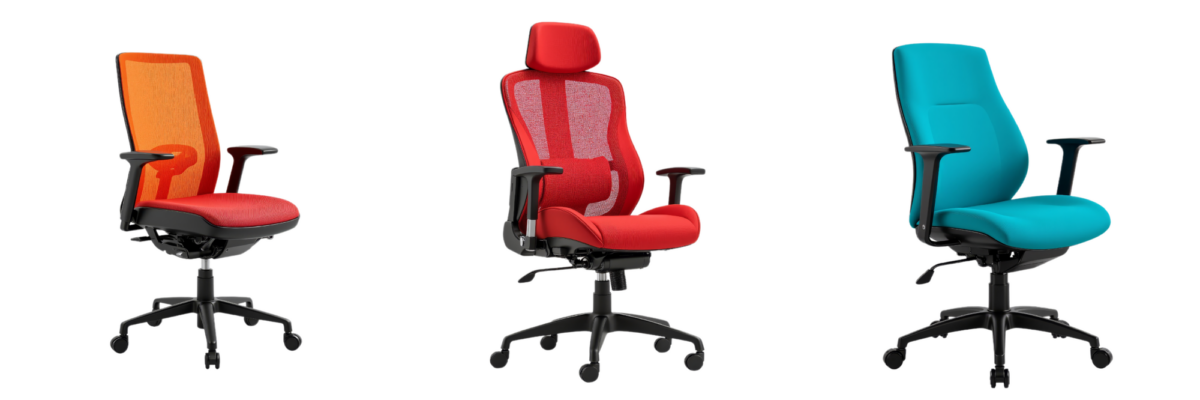
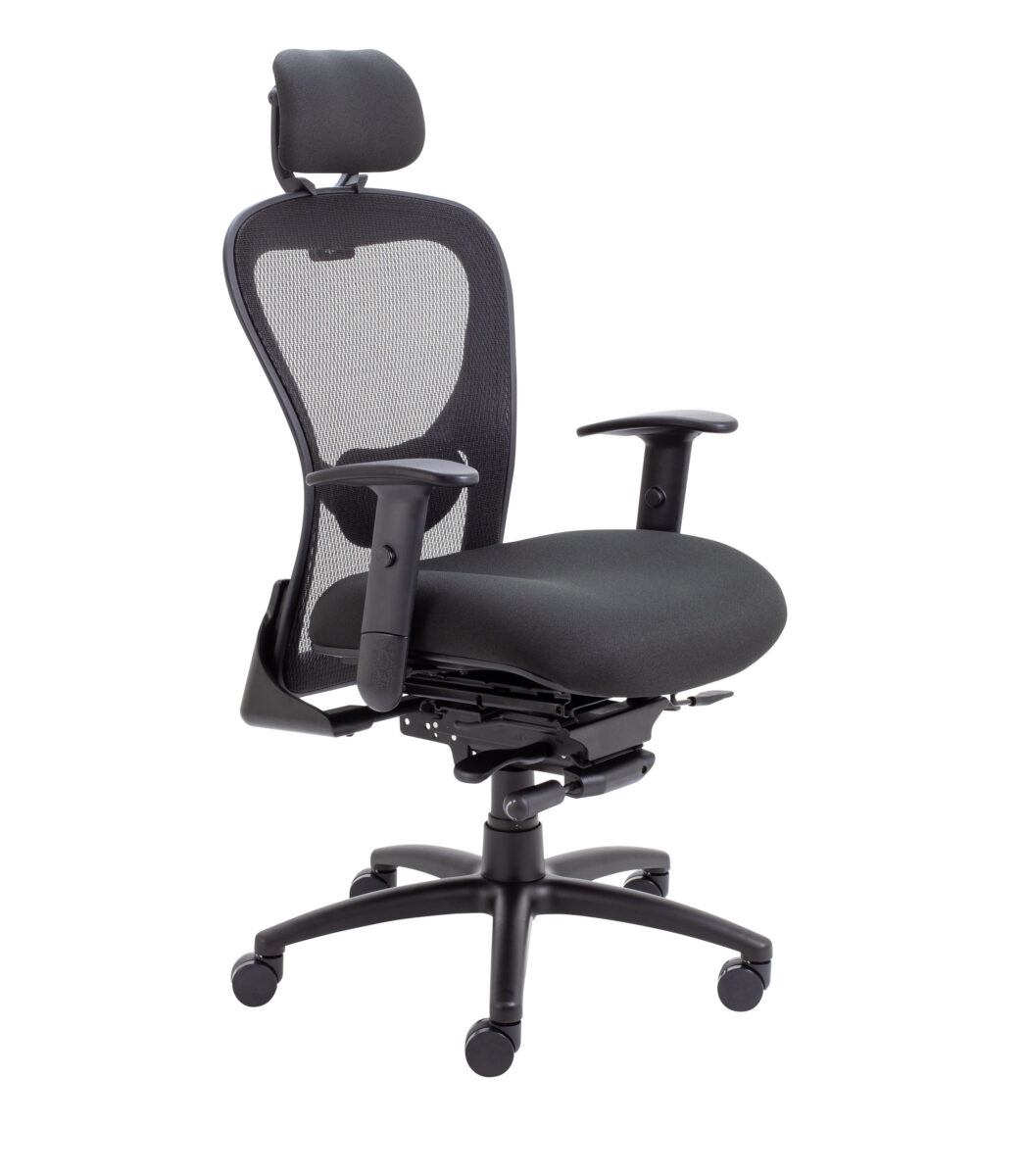
A headrest is not essential on every office chair.
For normal desk based working, the backrest and overall chair setup are generally more important.
However, a headrest can be useful for users who regularly recline, spend long periods on calls or simply prefer additional neck and head support.
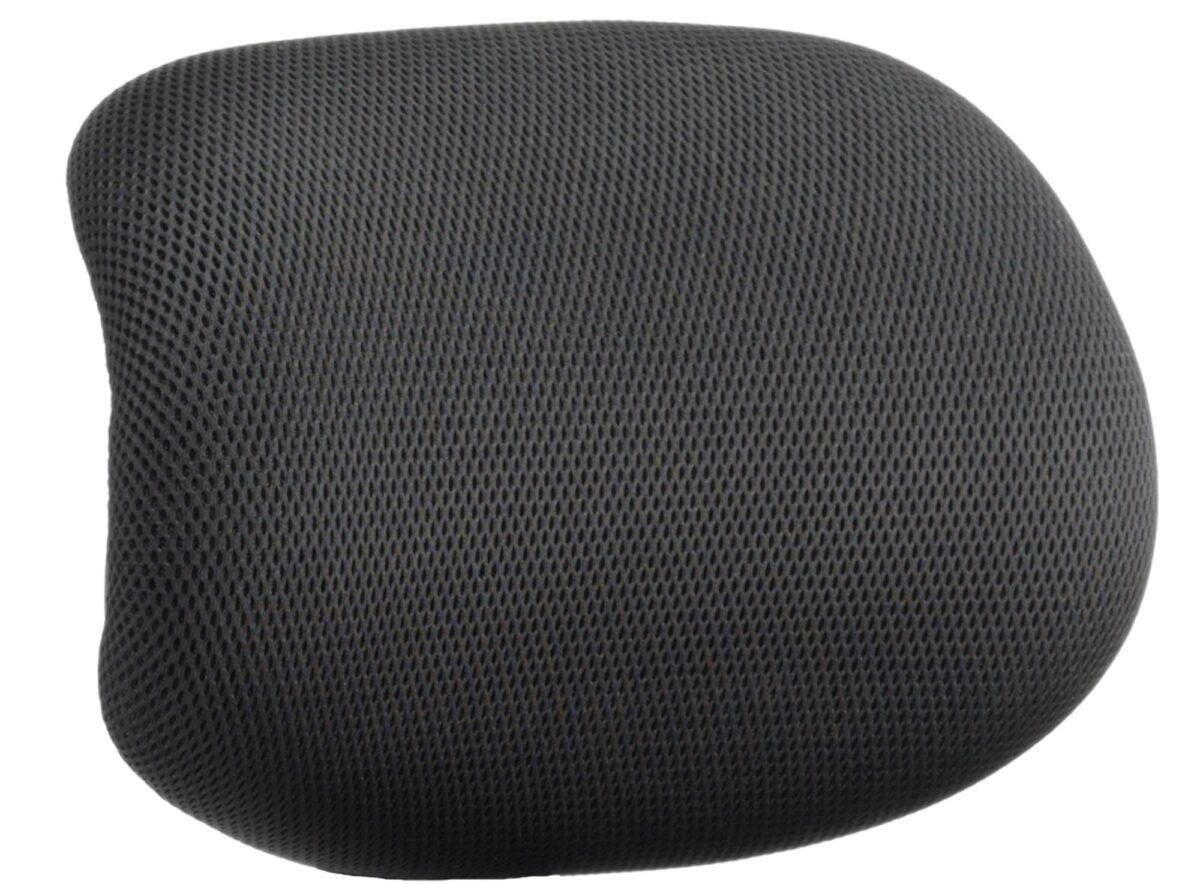
On more advanced ergonomic chairs, adjustable headrests allow their position to be changed to suit the individual rather than forcing the head into a fixed position.
We would normally treat a headrest as an optional specification rather than assuming that a chair with a headrest is automatically more ergonomic than one without.
Different descriptions can make office chair shopping confusing because there is often considerable overlap between categories.
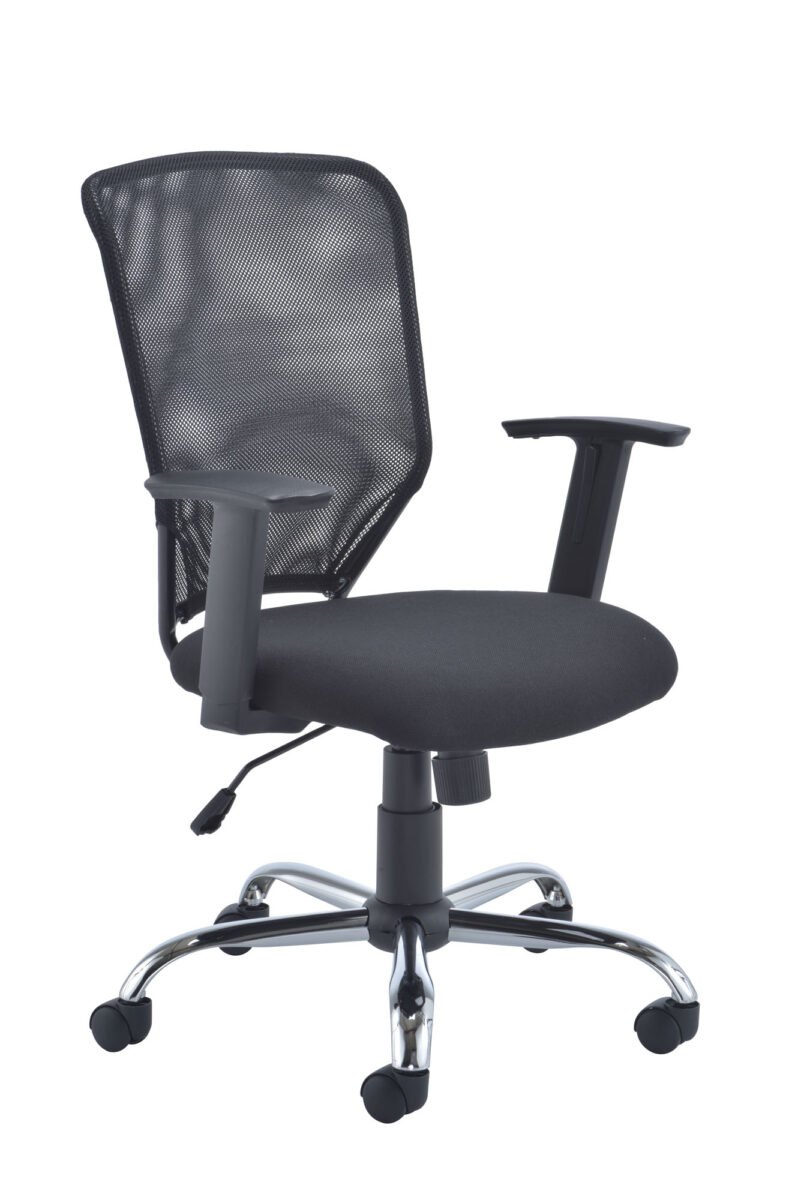
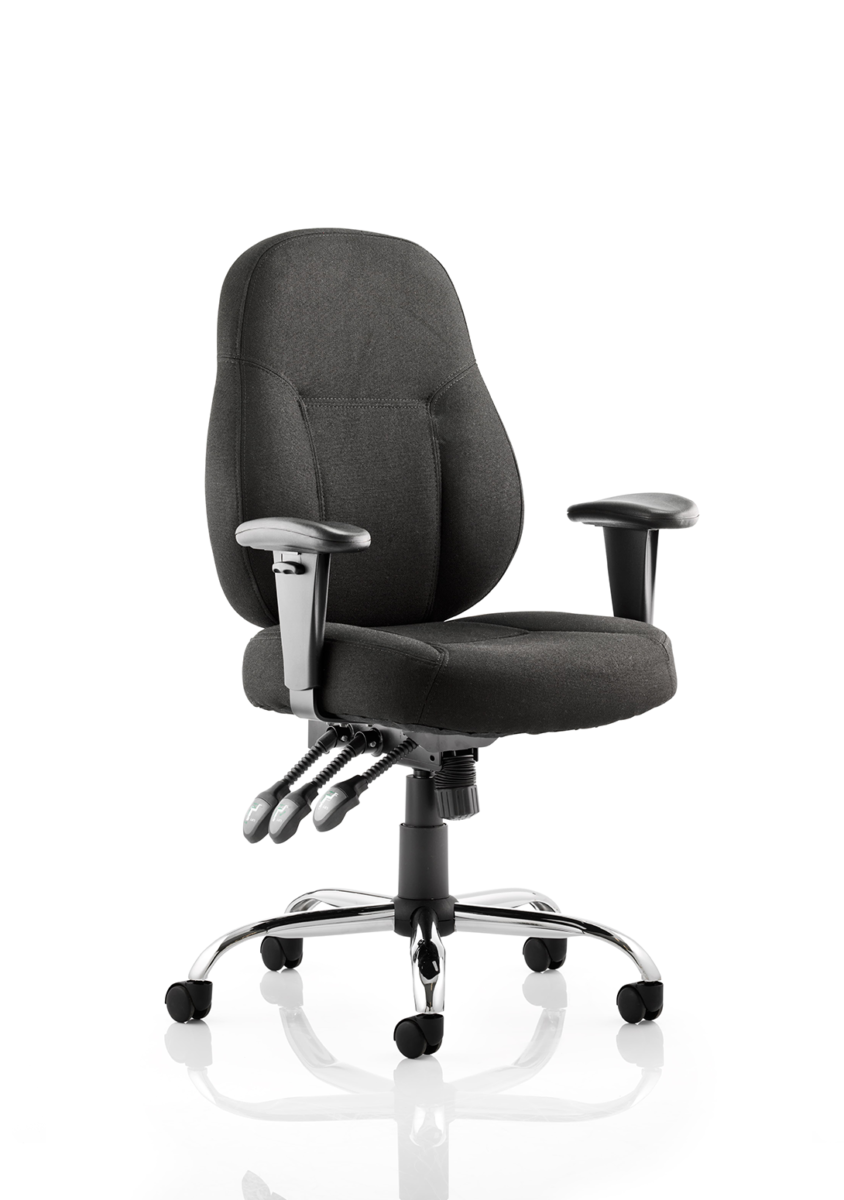
A task or operator chair is generally designed for day to day desk work and is the most common type of seating found within commercial offices.
Executive chairs tend to have a larger appearance, often with higher backs, additional padding or premium upholstery. Some are extremely supportive and adjustable, while others focus more heavily on appearance, so it is still important to look closely at the specification.
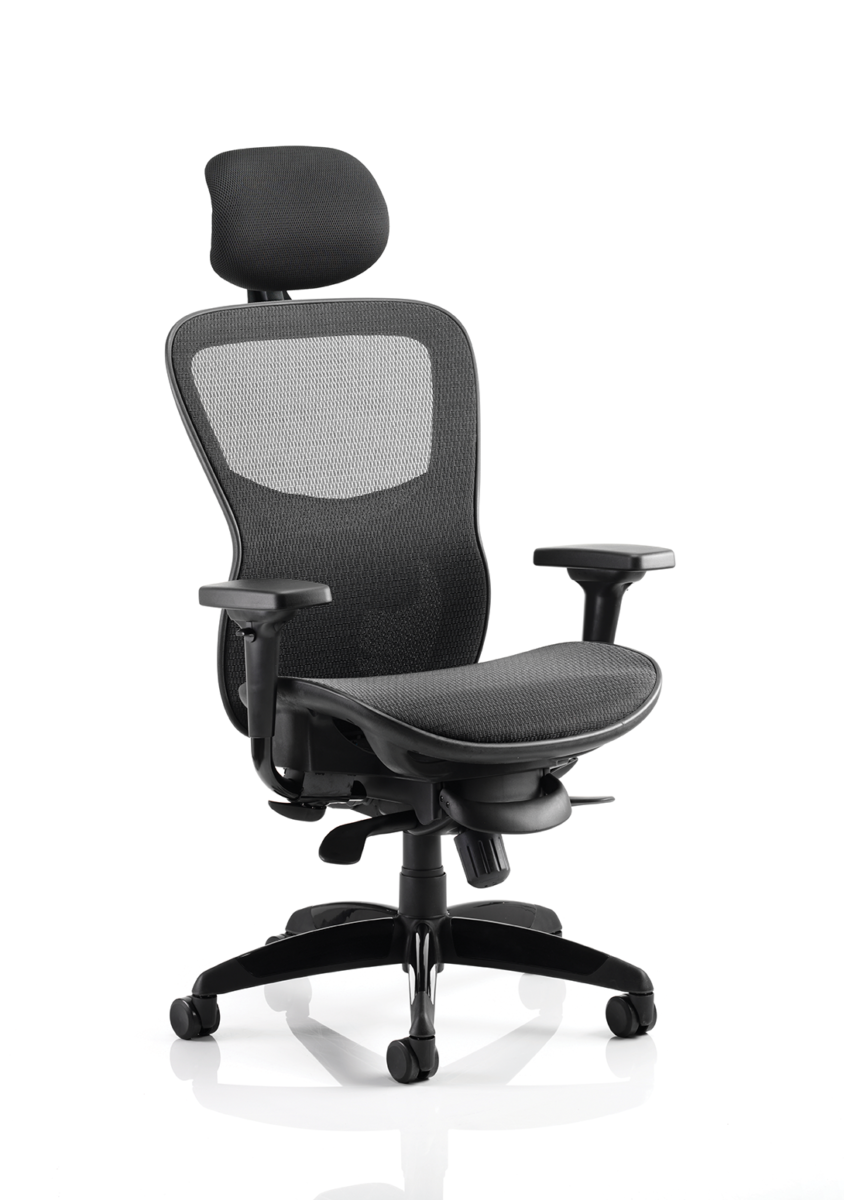
Posture and ergonomic chairs place greater emphasis on adjustment and individual support. These can be particularly useful where somebody spends extended periods at their workstation or has more specific seating requirements.
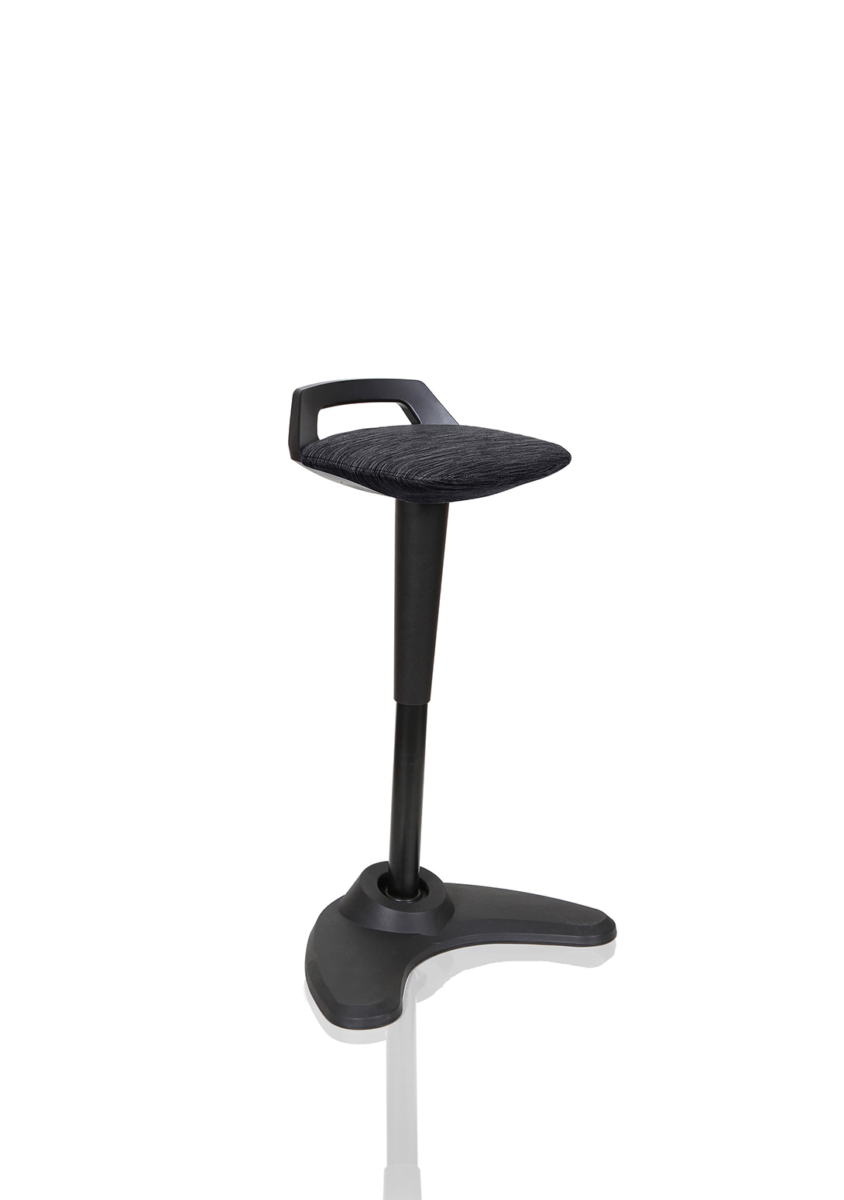
There are then specialist categories including heavy duty chairs, 24 hour chairs, draughtsman chairs and chairs designed for particular working environments.
Because Spaces Taylored supplies across these different seating categories, we are not tied to recommending one particular style of chair. The starting point should always be what the user and workplace actually require.
Even an excellent office chair cannot compensate for a badly configured workstation.
The relationship between the chair, desk, monitor, keyboard and mouse all affects how somebody sits and works.
The Health and Safety Executive recommends that DSE users should be able to achieve a comfortable working position, with appropriate seat height and lower back support. Screen position, keyboard height and the ability to work without unnecessary twisting or reaching should also form part of the workstation setup.
Spaces Taylored provides DSE assessments alongside ergonomic office furniture, which means we can look at the complete workstation where more individual support is required.
This can be particularly valuable where an employee is already experiencing discomfort or where an employer wants to understand whether changing the chair is actually the correct solution.
Sometimes a different chair is required.
Sometimes the existing chair simply needs to be adjusted properly.
Sometimes another part of the workstation is contributing to the problem.
That is why looking at the complete setup matters.
Buying one chair and buying 50 chairs should not be approached in exactly the same way.
For larger workplace projects, the aim is normally to find a chair that will work for a broad range of employees while remaining easy to adjust, durable enough for commercial use and appropriate for the available budget.
Consistency also matters.
Standardising seating can make future replacement, maintenance and workplace reconfiguration much simpler.
However, standardisation should not mean forcing every employee into exactly the same setup. There may still be individuals who require a different chair or additional equipment following a workstation or DSE assessment.
When Spaces Taylored is helping a business, school, university or public sector organisation specify seating for a larger workforce, we look beyond the initial cost of an individual chair.
Adjustment range, durability, warranty, ease of use, replacement components and how well the chair accommodates different users all become important.
For larger office furniture projects, our team can also help compare suitable chair ranges, review finishes and specifications, arrange samples where appropriate and coordinate delivery and installation.
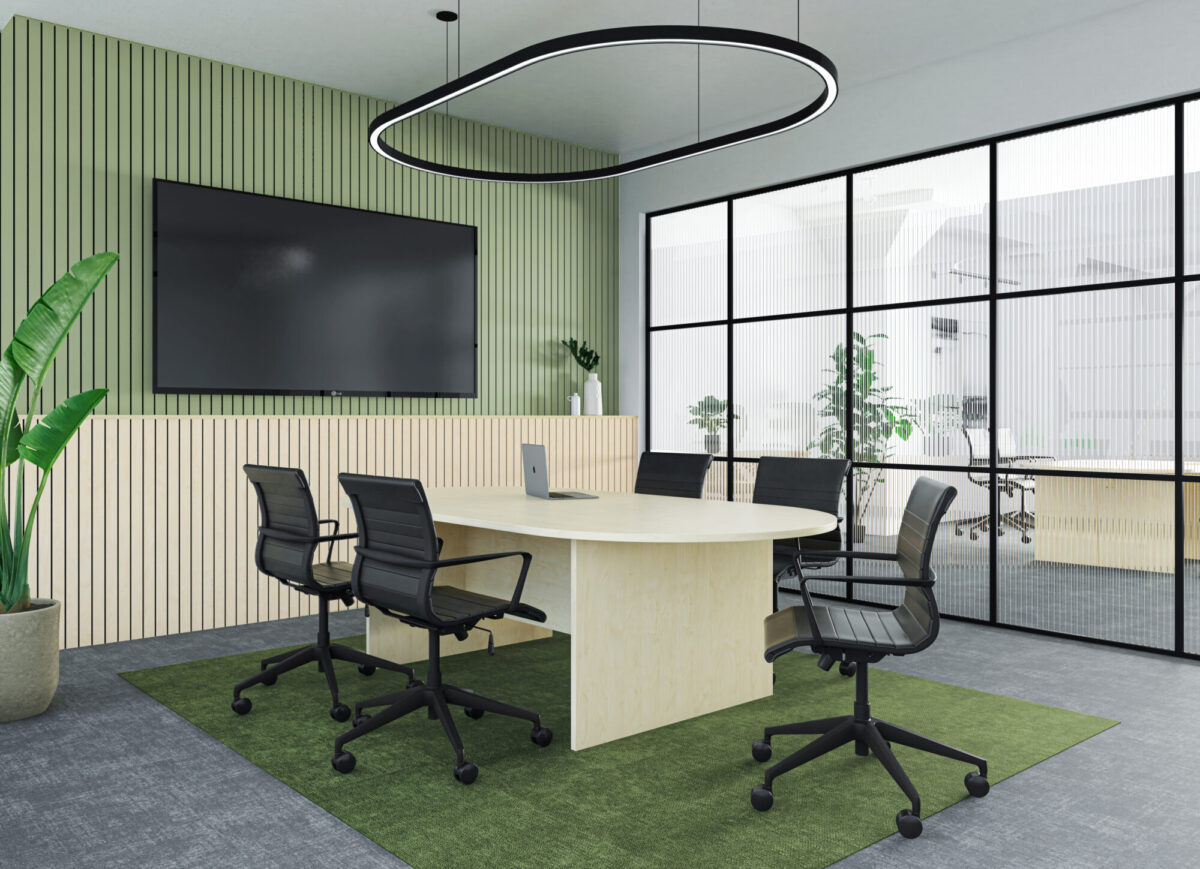
There is a place for budget office seating, particularly where a chair will only be used occasionally.
Equally, spending significantly more does not automatically guarantee that a chair will be right for the person using it.
The better question is whether the specification matches the application.
A chair used for a few hours each week does not necessarily require the same investment as a chair supporting somebody throughout every working day. Likewise, paying more for adjustments that the user does not need may add very little value.
This is an area where Spaces Taylored tries to be practical.
We would rather recommend a chair that properly suits the user and application than suggest a more expensive product simply because it has a longer specification list.
Where quality becomes particularly important is repeated commercial use.
Mechanisms, foam, upholstery, castors, gas lifts and other components all experience wear over time.
Looking at the expected usage, warranty, manufacturer, replacement parts and overall construction can therefore tell you much more about value than the purchase price alone.
Warranty length can provide a useful indication of the confidence a manufacturer has in a product, but it should not be considered in isolation.
Check what the warranty actually covers, whether different components have different cover periods and whether there are restrictions relating to hours of use or maximum user weight.
For organisations making a significant furniture investment, availability of replacement components can also be important.
Being able to replace an arm, castor, gas lift or another component can extend the practical life of a chair rather than requiring the entire product to be replaced.
At Spaces Taylored, this becomes particularly important when we are looking at whole life cost and sustainability rather than simply the initial purchase price.
A chair that can remain in service for longer can often represent better value than a cheaper product that needs replaced much sooner.
Office chairs are extremely personal.
Specifications and dimensions will narrow the options considerably, but sitting in a chair is still one of the best ways to understand whether it suits you.
Spaces Taylored has a workplace furniture showroom in Dundee where customers can see and try office furniture and talk through the differences between different types of seating.
This can be particularly useful if you are trying to compare several ergonomic chairs that appear very similar online.
For larger projects, Spaces Taylored can also help organisations identify a shortlist based on the workforce, working patterns, budget and environment rather than expecting the buyer to work through hundreds of chair options alone.
Before purchasing an office chair, consider:
How many hours each day will the chair be used?
Will the chair be used by one person or shared between several users?
Does the user require adjustable seat depth?
How much lumbar adjustment is required?
What type of chair mechanism is appropriate?
Are adjustable arms required?
What seat and backrest dimensions suit the user?
What is the recommended maximum user weight?
Will mesh, fabric or another upholstery type work best for the environment?
How long is the manufacturer’s warranty?
Are replacement components available?
Does the chair need to coordinate with an existing workplace furniture scheme?
Will a DSE assessment or more specialist ergonomic advice be required?
Answering these questions first will usually reduce a very large range of office chairs to a much more manageable shortlist.
Start with the user and the job the chair needs to do.
Consider how long it will be used, whether it will be shared, the user’s size, the level of adjustment required and any particular workstation requirements.
Then look at the mechanism, seat depth, lumbar support, arms, materials, warranty and overall build quality.
The most expensive chair is not necessarily the right chair.
The cheapest chair is not necessarily good value either.
The aim is to choose a chair that is appropriately specified for the person, workplace and amount of use it will receive.
Spaces Taylored supplies a wide range of office seating, from everyday task and operator chairs through to advanced ergonomic, posture, executive, heavy duty and specialist seating.
We can supply a single office chair or help organisations specify, supply and install seating across an entire workplace.
If you are not sure where to start, speak to the Spaces Taylored team.
Tell us who the chair is for, how it will be used and roughly what you want to spend, and we can help narrow down the options.
Explore the Spaces Taylored office chair range online, visit our workplace furniture showroom in Dundee or contact our team for advice on choosing the right seating for your workplace.
Email: info@spacestaylored.com
Phone: +44843 1229545
VAT no. GB366249277
Company no. SC662484